
Prerequisites for natural down filling
Quick Answer (TL;DR): To perfectly fill down jackets, set the system pressure to 0.6-0.8 MPa and wait for the current scale to display a Green “Ready” on the touch screen. Secure the 25mm filling nozzle in the jacket fabric inner taffle tightly, and use the black foot pedal to trigger the pneumatic discharge. Always fill grid by grid and step on the pedal 3 seconds again to clear any remaining material if the current scale background turns Yellow.
Proper synchronization between holding the filling tube and controlling the foot pedal is the key to achieving precise garment weights, maintaining high productivity, and ensuring a clean workshop environment. This technical guide outlines the standard operating procedure for operators to ensure perfect down distribution without material waste.
Prerequisites for Manual Filling Control
Before initiating the filling cycle, verify the following mechanical and digital parameters on the FUDA filling machine:
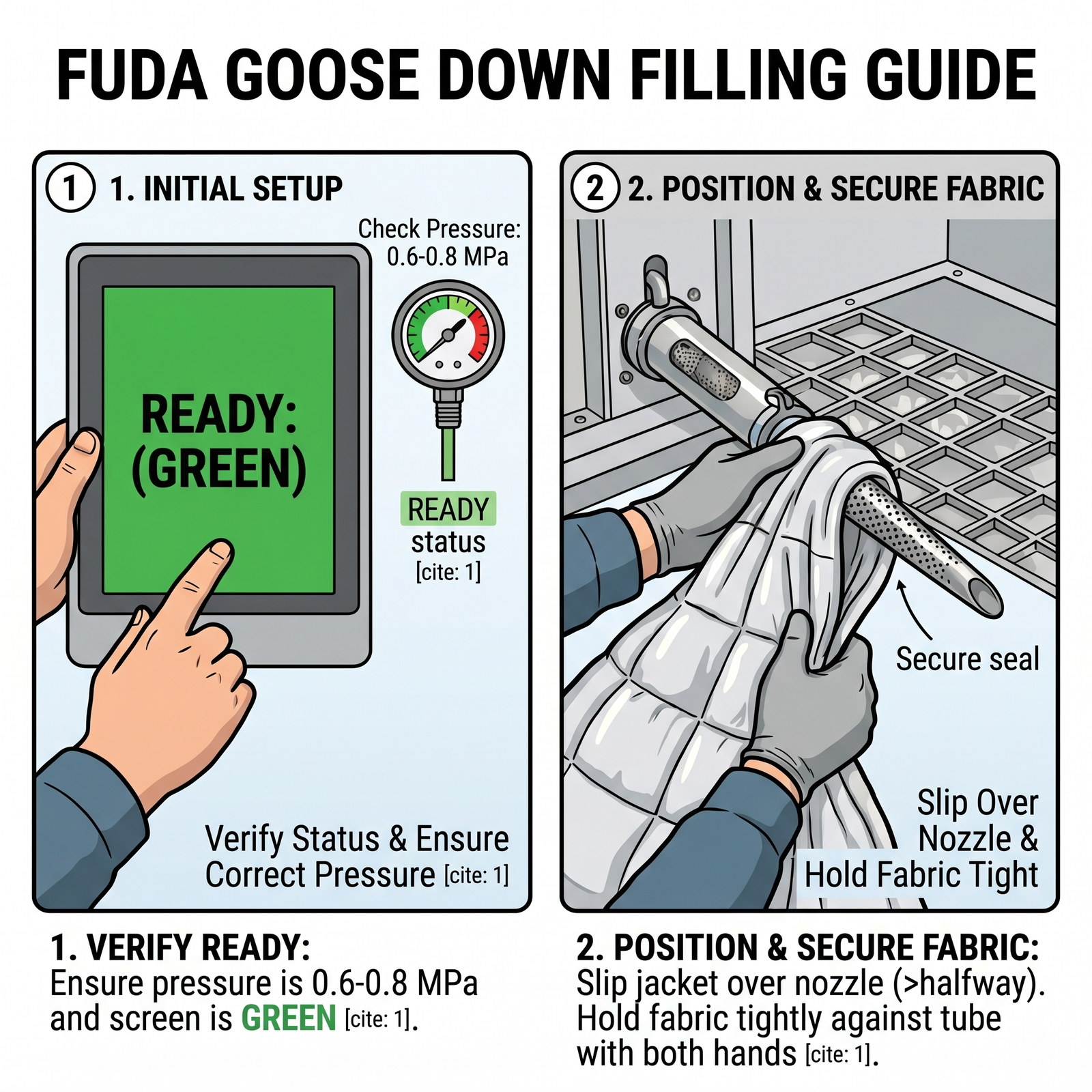
System Air Pressure: Ensure the pressure is regulated within the standard operating range of 0.6 to 0.8 MPa. This high-pressure pneumatic supply ensures smooth goose down transport without damaging the fabric or causing sluggish pneumatic gate closures.
Target Weight & System Status: The target weight must be set and locked on the 10-inch HD PLC touchscreen. **Crucially, do not start filling until the current scale background turns green, which indicates the scale is “Ready, Allow for filling”.
Mechanical Safety: Ensure the internal bracket for the 25mm filling pipe is tightened securely. The high-pressure air blast can cause the pipe to recoil, and a loose bracket could cause the pipe to disconnect.
Feeding Blower and Humidifier: Ensure the feeding blower and storage hopper are active, and the humidifier is running to dissipate static charges, keeping the goose down fully lofted and free of clumps.
Step-by-Step Operator Guide
1. Holding the Filling Tube Properly
The operator must maintain a firm, ergonomic grip on both the filling nozzle and the garment panel to manage the high-pressure airflow:
Create a Secure Seal: Slip the jacket compartment or quilt lattice opening completely into the filling tube nozzle. Use your hands to hold the fabric tightly against the tube. Because the foot pedal frees up your hands, you must use them to secure the seal, preventing the high-velocity down fibers from blowing out of the entry point.
Maximize Compartment Volume: Ensure the garment panel is fully extended and not twisted or compressed. Air must flow smoothly through the fabric pores to allow the goose down to expand and settle evenly inside the compartment.
Filling Tube: Ensure that the filling tube—which features vent holes—is inserted more than halfway into the fabric inner. This facilitates easy filling and prevents material blockage. Do not completely obstruct the vent holes on the filling tube with your hand.
2. Controlling the Foot Pedal Switch
The foot pedal acts as the direct trigger for air injection and down discharge. Precision footwork prevents material blockages and weight inaccuracies:
Triggering the Discharge: Step on the black foot pedal switch connected to the base of the machine. The pneumatic system will blow the pre-weighed raw material evenly into the fabric.
Anti-Clogging Tip: When filling with down, never obstruct the outlet of the filling tube; simultaneously, ensure there is ample space within the down-proof fabric shell.
Monitor Screen Indicators (Crucial): After releasing the pedal, check the background color of the Scale Number. If it turns Yellow (with a positive number), this means there is remaining material in the hopper. You must step on the red foot pedal again to blow the remaining material until the hopper is empty. Once empty, the background will turn Medium Cyan or Green, meaning you can move to the next grid.
3. Synchronizing the Release
Grid by Grid Execution: Once a section is successfully filled and the hopper is verified empty, release the pedal, remove the filled section, and prepare the next empty grid. Continue this sequence grid by grid in turn.
The 2-Second Rule: After releasing the foot pedal, do not pull the garment off the tube immediately.
Clear Residual Goose Down: Wait exactly 1 to 2 seconds for the residual air pressure inside the nozzle to completely clear. This ensures all measured down is safely injected deep into the jacket and prevents loose natural down from escaping into the workshop atmosphere when the fabric is removed.
Expert Notice
CRITICAL: Never depress the foot pedal switch when the filling tube nozzle is completely exposed or not securely sealed inside a garment panel. Uncontrolled air injection without a fabric enclosure creates high static electricity and will disperse loose goose down into the room instantly, requiring the internal exhaust and dust bags to overwork.
